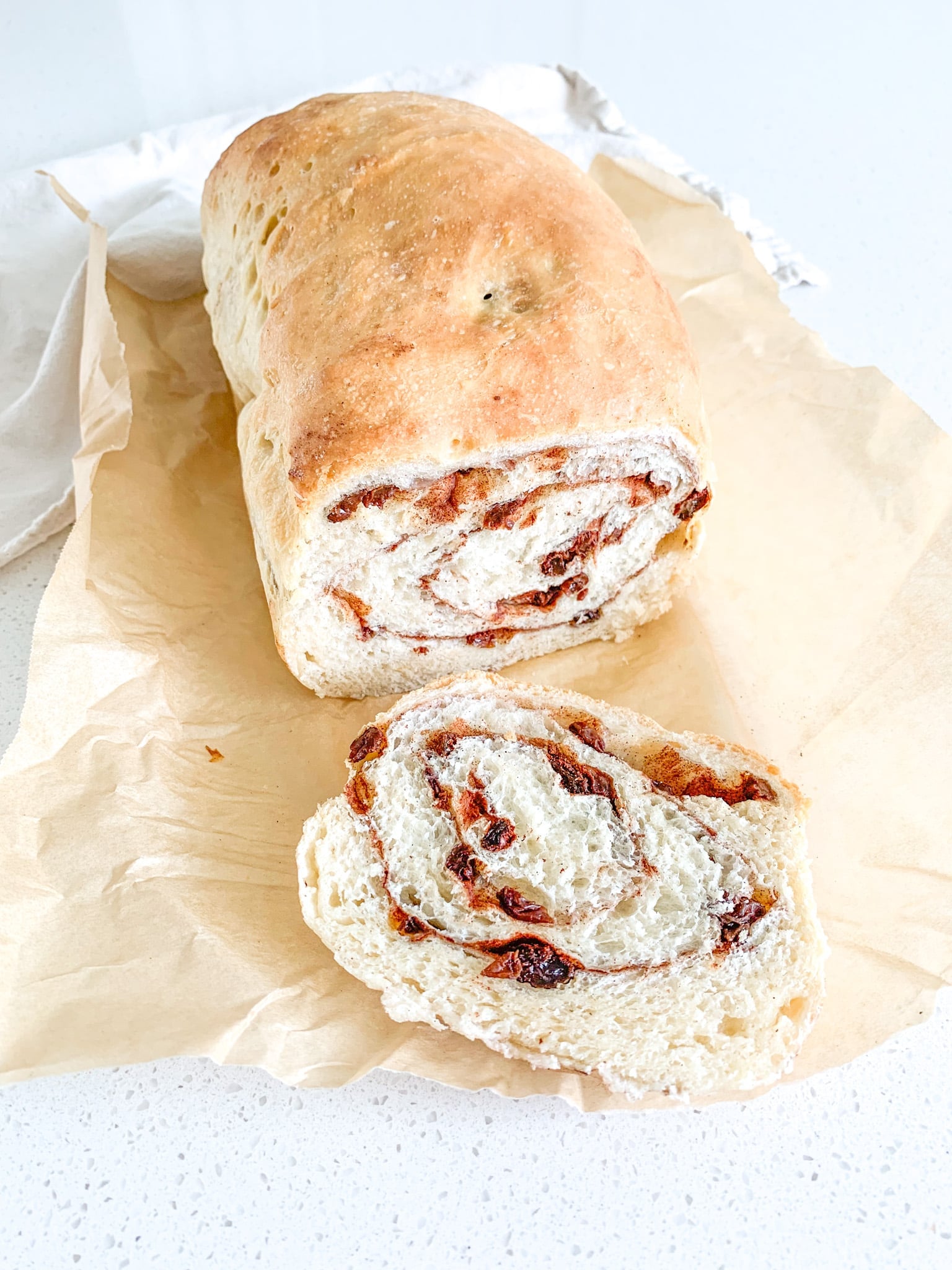
Sourdough Cinnamon Raisin Bread
My sourdough cinnamon raisin bread is so simple to make! It's light, fluffy, and lightly sweetened with honey. This recipe has helped us replace store-bought raisin bread in our house and I hope it'll do the same for you!
Ingredients
Instructions
- BEFORE YOU GET STARTED: If your starter isn't already fed and bubbly, feed it 4-12 hours before starting this recipe to ensure it's active. I recommend feeding it a 2:1 ratio of unbleached flour to filtered water to get the same results as I do when you make this recipe. Example 2:1 feeding: 1/2 cup flour + 1/4 cup water added to your entire starter jar (you can fill your jar up to half full, double this feeding or cut it in half depending on how much starter you want your jar). Let starter jar sit at room temperature until it's bubbly and has risen. Then measure out the amount of starter you need and begin this recipe!
Make the Dough
- Add fed starter, honey, water, avocado oil, and sea salt to a large mixing bowl. Stir to combine, starter doesn't have to fully combine at this time.
- Add flour and stir to combine until a dough forms. Use your hands to finish incorporating dry ingredients. Depending on your starter's hydration, which varies, the dough may be a little too dry so just add a couple tablespoons of water. If it's too wet, add a couple tablespoons of flour.
- Either knead the dough for 2-3 minutes by hand OR do the stretch-and-fold method (pick one). To do the stretch and folds, simply pull dough upward along the outside edge of the dough and fold it into the middle, do this all around the dough 1-2 times. Let dough sit for 10-15 minutes and repeat for a 2nd stretch and fold.
Bulk Ferment
- After kneading OR stretch-and-folding, place a damp kitchen towel or a lid loosely on the bowl. Let the dough sit at room temperature for 10-12 hours to bulk ferment. Please see notes below for troubleshooting. The dough needs to double or triple in size during this time. Depending on the time of year and temperature of your house, the time will vary. Add a few more hours if needed until doubled or tripled in size.
Shape the Bread
- OPTIONAL: If you don't want to/don't have time to continue the recipe, you can place the fermented dough in the fridge, after it's double/tripled in size, with an airtight lid for up to 48 hours until you're ready to continue.
- Once dough has bulk fermented and doubled/tripled in size, remove from bowl and place on the counter. You can lightly dust the surface with flour if dough is sticking.
- Using your hands, stretch dough out to a medium sized rectangle shape (it doesn't have to be an exact size).
- Add raisins evenly over the entire rectangle of dough, then sprinkle cinnamon evenly over the top. Make sure you get them spread all the way to the edges to ensure each slice of bread has goodies. Use your hands to press raisins and cinnamon down into the dough
- Starting on one of the shorter ends begin rolling the dough tightly into a log. Pinch the seam together as well as the two ends to close them.
- Fold the two ends of the dough inward on top of the log and press down to seal the seams.
- Flip dough over so it's upright and use your hands, around the sides, to press it more into a loaf shape if needed, sealing any seams. Set aside for one moment.
- Grab a stainless steel loaf pan (if using a ceramic pan please add 10-15 minutes to the bake time) and a piece of parchment paper that fills the entire pan with extra on top for easy removal after baking.Or grease inside of pan with butter and a dusting of flour. Turn pan upside down to remove excess flour.
- Place shaped dough in the center of the parchment paper and place into the pan or place dough into the pan if not using parchment.
2nd Rise
- Cover pan with a dry kitchen towel and let rise at room temperature for 3-4 hours. It needs to double or triple in size and look puffy, this is crucial for light fluffy bread! Please see notes below for troubleshooting. Depending on the time of year and temperature of your house, the time will vary. Add a few more hours if needed until doubled or tripled in size.
Bake Bread
- Once bread is doubled/tripled in size and puffy, preheat oven to 375 degrees Fahrenheit. Once preheated, bake for 40-45 minutes until baked all the way through.
- Remove from oven and carefully remove from pan using the parchment paper. If you didn't use parchment, let bread sit for 10 minutes before removing.
- Brush the top with melted butter, if desired, and let cool completely before slicing. Enjoy!
Video
Notes
TROUBLESHOOTING HELP
Issue #1:
What to do if your dough isn't doubling in size during the bulk ferment and/or 2nd rise - If your dough doesn't look like it's doing anything halfway through either bulk ferment or 2nd rise, you need to place it in a slightly warmer area or give it a few more hours. This can be in a turned-off oven with the light on and oven door open, or you can slightly warm the oven to about 80 degrees Fahrenheit, then turn it off and place your dough inside with the door shut. Never leave the oven on, even on the keep warm setting, with fermenting dough inside.
Issue #2:
What to do if your dough won't double in size even in the warmer area (and your baked goods are dense) - If your dough doesn't double even in the warmer area for either the bulk ferment and/or the second rise, your starter is too weak to ferment the dough even in a warm environment. Don't worry this can be fixed!
To fix this, you will want to leave your starter out on the counter for 2 days and feed your entire starter jar every 12 hours at a 2:1 ratio of unbleached flour to filtered water (example: 1/2 cup unbleached flour + 1/4 cup filtered or bottled water, double this or cut it in half depending on how much starter you have, only fill your jar half full). Remove some starter before doing the feedings to make room if needed.
Make sure you're using unbleached flour and filtered or bottled water to do this. If you don't, it will affect your starter strength. Reverse osmosis water (or any water that uses salt in the filter) can make the starter weak.
By doing this feeding every 12 hours will strengthen the cultures in your starter for light and fluffy breads and treats. After the 2 days, you can go back to feeding it like normal. Be sure to use the 2:1 ratio feeding from here on out.
Sourdough Baking Disclaimer - I feed my sourdough starter a 2:1 ratio of unbleached flour to filtered water, this creates a 50% hydrated starter. If you feed your starter differently or it isn't active before you start making this recipe, results may vary.
Did you make this recipe? – If you loved it, I’d be so grateful if you left a comment on the blog post. It helps more than you know. You can share a photo on social media, tag @plumbranchhome
A Note From Molly – This recipe was developed and tested by me, NEVER AI (artificial intelligence). My recipes on Plum Branch Home are created with purpose and cherished in our own home. What you see from PBH is real, made for a reason, tested, and loved! We’re serving God by loving our families one recipe at a time.
